Namrata Nayyar
01-Jul-2026
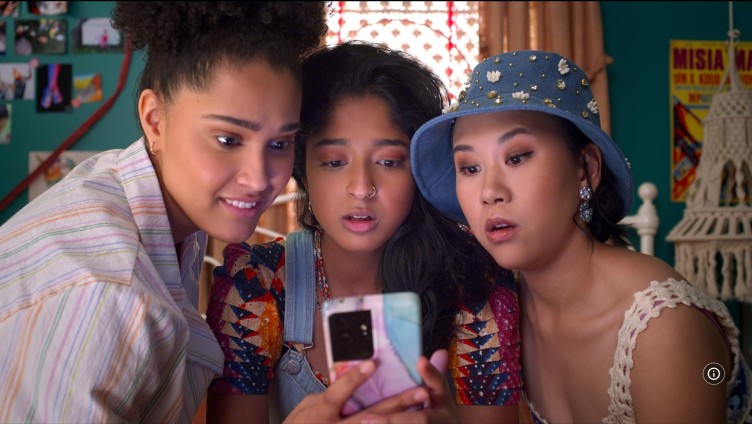
Beauty culture, social media and aggressive marketing are colliding to redefine adolescence for a generation of young girls.
Inputs by: Namrata Nayyar Kamdar, Founder, Plenaire India
I have found myself thinking a great deal about the beauty industry lately, although not in the way one might expect from someone who has spent more than two decades working within it. My daughter is sixteen. Like so many girls her age, she inhabits a world that feels both familiar and entirely foreign to the one I grew up in. There are the same dramas of adolescence: friendships that change overnight, exam pressures, first crushes, the desire to fit in while simultaneously wanting to stand apart.
Adolescence has always been a study in contradiction. And beauty has had its place within that landscape. I still remember rummaging through my mother’s dressing table drawers, fascinated by the glamour of these unknown, grown-up rituals. There were mauve and maroon lipsticks worn down into soft, slanted stubs, strands of milky pearls and delicate glass bangles. Green Boroline tubes sat next to blush-face puffs, carrying the faint scent of powdery roses. Kajal pencils and bobby pins stood like stiff soldiers beside heavy-bottomed glass bottles of L’Air du Temps and Trésor.
Beauty back then wasn’t about looking prettier but about feeling like a grown-up – someone who could finally apply lipstick or afford real perfume. Perhaps that is why I feel uneasy when I watch girls today encounter beauty so differently. It isn’t that they care about their appearance any more than we did. Nor do I subscribe to the rather lazy narrative that social media has somehow created a generation of self-obsessed young women and men. In fact, most of the teenagers I know strike me as thoughtful, politically aware, compassionate and startlingly articulate.
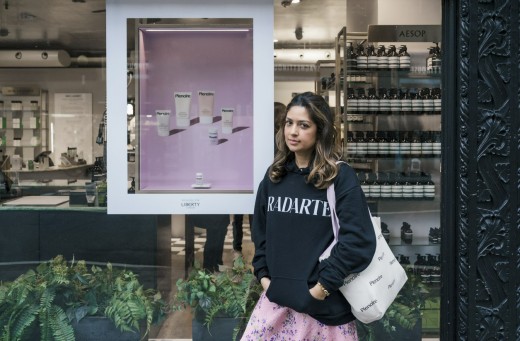
(Image Credits: Namrata Nayyar Kamdar, Founder, Plenaire India)
What has changed is the sequence of things. For many of us, beauty arrived after other parts of ourselves had already begun to take shape. We had discovered whether we preferred poetry to literature, hockey to debating, or mathematics to history. We knew which friendships made us feel safe and which teachers altered the course of our thinking. We had started, even if tentatively, to form opinions about the world and our place within it. The gradual and time-tested “lengthening of the rubber band” is adulting. We were 17 or 21 when beauty became part of our vocabulary, not 10. The generation before us had Sylvia Plath. We had Naomi Wolf. In different ways, both of them invited us to think critically about beauty and appearance rather than consume them through a commercial lens designed only to monetise and sell. These books and ideas still, of course, exist. But the draw of social media and online content increasingly drowns them out at younger ages than ever before.
Beauty has now become one of the earliest frameworks through which girls interpret themselves. They understand the language of brightening and tightening; they know how to identify imperfections before they have had the opportunity to develop opinions about them. As both a beauty founder and mother, I find this difficult to reconcile. Recently, I came across a brand promoted by a popular American reality TV star that was creating plastic-based face masks and beauty products for girls as young as six. There were toddlers in its campaigns, dressed like fully grown, sophisticated teenagers. Data highlights the consequences of this obsession with beauty among the young.
A 2025 Indian study, conducted among adolescents in the age group of 13-18 years and published in the National Institutes of Health, underscored how excessive usage of social media platforms was associated with rising body dissatisfaction and dysmorphia (BDD) in adolescents. The findings revealed that social media filters had the potential to affect many adolescents’ self-esteem and perceptions of their body image, with BDD prevalence at about 29.45 per cent in the study population.
In the documentary Molly vs the Machine, which followed the well-publicised suicide of teenager Molly Russell and her family’s fight to hold social media company Meta to account, her family exposed uncomfortable truths about the digital environments our children inhabit. More recently, whistle-blower allegations highlighted by the Molly Rose Foundation suggested that platforms could identify moments of teenage vulnerability, such as when a girl deleted a selfie she disliked, and use those signals to help advertisers target her with beauty products. The message is chilling: normal childhood insecurities are now becoming commercial opportunities. Meanwhile, clinicians are observing another shift. Large cohort studies involving more than 70,000 girls have identified a significant trend towards earlier puberty, with girls beginning menstruation at younger ages than previous generations. Earlier puberty has, in turn, been associated with higher rates of anxiety, depression, eating disorders and body dissatisfaction, as well as longer-term physical health implications. Beauty, of course, is not solely responsible for this. That would be a very reductive approach.
But one cannot deny the existence of beauty products, specifically designed for “tweens”, which contain active ingredients that could hamper growth. Research from the University of California’s CHAMACOS Programme has suggested that exposure to certain chemicals commonly found in personal care products, including parabens and phthalates, may be associated with altered pubertal timing in girls.
What we need to understand is that the beauty industry is not the villain here. It was, after all, created to offer products that allowed people to experiment with different versions of themselves. Like any industry, whether it’s social media, fast food, gaming, cigarettes or alcohol, it is the law that needs to change and hold stakeholders accountable. And as Generation X adults, parents and guardians, it’s our dual responsibility to make that possible. In the UK and other parts of Europe, policymakers and parents are already taking steps in this direction, lobbying parliament and regulating each of these industries effectively.
In India, where rapidly expanding internet connectivity has led to a concomitant rise in young individuals pursuing content creation as a primary goal, sometimes income and a national policy regarding social media use among the youth are just as much the need of the hour. Childhood should be the period in which character, competence, curiosity and confidence take root. Beauty should complement that process, not define it. It’s why I am advocating to put a stop to childhood becoming one of the beauty industry’s most aggressively pursued frontiers.
Not too long ago, I started a petition on change.org to protect vulnerable children from beauty brand marketing. We also plan to file a similar PIL in court against beauty manufacturers in India targeting young kids. The hope is to create a safer, more supportive future for our children.
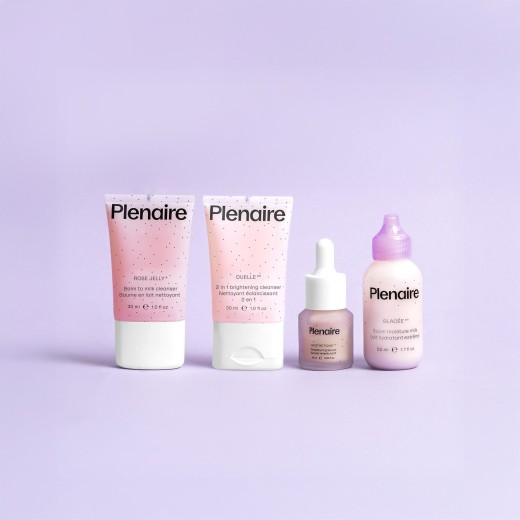
Because there will always be time to become more beautiful. But first, there must be enough time to become yourself. Plenaire India is for the correct age group, with simple and clean beauty products and ingredients which are modular and safe. Plenaire is a science-powered skincare brand designed in the UK and made in India specifically for Indian skin and climate, offering innovative formulation design, science-backed efficacy and European cosmetic safety standards. Plenaire combines research-driven formulations and has a proprietary blend in Eclat Botanique that blends and combines plant, marine, and clinically proven actives across the entire range. 100% ingredient transparency across every product.
Cover Image Credits: Netflix