
Neha Mehrotra
02-Jul-2026
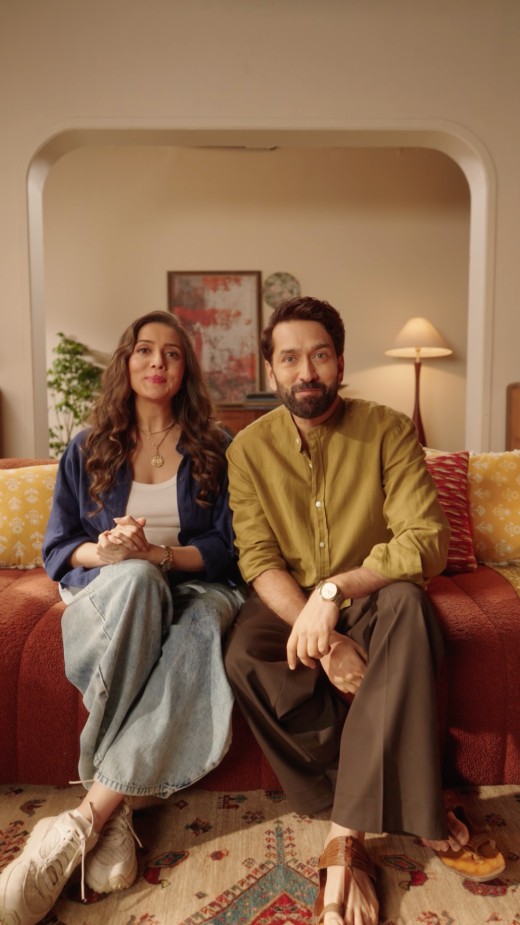
P•TAL's newest launch, crafted in collaboration with Nakuul Mehta and Jankee Parekh, SuRu, discovers a child’s first relationship with food, ritual, and care.
For Nakuul Mehta and Jankee Parekh, parenting has never been reduced to picture-perfect moments on social media. The couple have spoken with unusual honesty about the realities of raising children — from navigating conflict and emotional repair to questioning fear-based discipline and learning how to be fully present as parents.
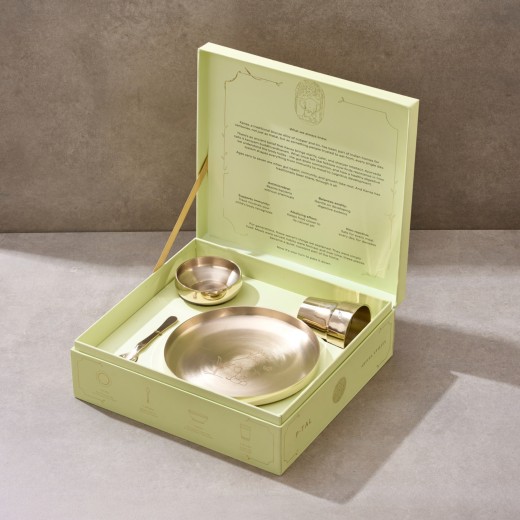
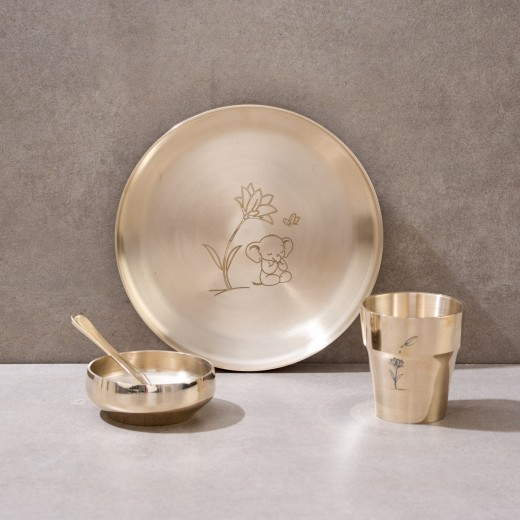
And those conversations have found a natural extension in SuRu, their collaboration with P•TAL. Inspired by their children, Sufi and Rumi, the Kansa mealtime collection explores a child’s earliest relationship with food, ritual and independence, while gently reintroducing traditional Indian wisdom into contemporary family life. In conversation with PEAKLIFE, the couple share about how the collection reflects their beliefs, their collaboration with P•TAL and some insider tips on parenting!
1. What convinced you to collaborate with P•TAL, and why the name SuRu?
What drew us to P•TAL was how naturally their philosophy aligned with our own. As parents, we're constantly trying to make thoughtful choices for our child, whether it's the food we serve, the routines we build, or the products we bring into our home. P•TAL’s commitment to reviving traditional wisdom through beautifully crafted, functional products felt very authentic.
The name 'SuRu' is very personal to us! It comes from our children’s names: Su from Sufi and Ru from Rumi. From the very beginning, we knew that if we were creating something rooted in childhood, family and memories, it had to carry a piece of them with it. What we loved is that beyond being a combination of their names, SuRu also beautifully represents the idea of a beginning. So, the name felt meaningful to us, both as a tribute to our children and as a symbol of the journey every child begins at the dining table.
2. How involved were you in the design process? Were there specific features that came directly from your own parenting experiences?
We were involved from the very beginning. As parents, we've experienced the chaos, curiosity, spills, and little victories that come with introducing our own children to independent eating. We wanted the set to feel safe, practical, and intuitive for tiny hands.
Simple things like the size of the bowl, the grip of the spoon, the weight of the pieces, the rounded edges and the overall usability came from conversations around our own experiences at home. We weren't looking to create something fancy; we wanted it to feel practical first and beautiful second. We wanted something that parents would genuinely use every day and children would enjoy growing up with.
3. Many young parents may be unfamiliar with Kansa. Why is it worth considering for children?
We think many young parents today are actively trying to reconnect with traditions, but in a way that feels relevant to modern life. Kansa has existed in Indian households for generations. For us, it wasn't just about the material itself. It was about introducing our child to something timeless, durable, and rooted in our cultural heritage. There's something beautiful about serving a meal in a vessel that carries stories and traditions from previous generations. It turns an everyday activity into something a little more meaningful.
4. The collection is called "The First and Forever Set". According to you, what's one thing that every parent holds on to forever?
For us it’s the memories. As parents we spend so much time worrying about milestones and routines, and then one day we realise it's the tiny moments that stay with us forever. The first time they tried feeding themselves, the mess they made, the conversations around the dining table and the funny habits they had. Those tiny everyday moments stay with you forever.
5. What are some mealtime rituals that are non-negotiable in your household?
One thing we try very hard to protect is eating together whenever possible. Life gets busy and schedules can be unpredictable, but sharing a meal as a family helps us reconnect. We also try to keep distractions away from the table. Mealtimes are a chance to talk, laugh, listen to each other's stories, and simply be present. Those few moments of togetherness are incredibly valuable.
6. Jankee, the SuRu Fullaby Mealtime Rhyme, adds a musical dimension to the collection. What emotions did you want children and parents to feel when listening to it?
Jankee: I wanted it to feel comforting, playful, and familiar, almost like a little companion during mealtime. As parents, we naturally create little songs, rhymes and rituals around everyday moments. Those are often the things children remember years later.
Music has a beautiful way of creating memories. The rhyme was created to bring warmth, comfort, and playfulness to mealtimes, helping transform them into moments children genuinely look forward to rather than something they need to be persuaded into. I hoped it would make mealtimes feel less like a task and more like a joyful family ritual, one filled with connection, laughter, and togetherness.
7. If your children could review the SuRu set, what do you think they would say about it?
We think the review would be very straightforward – “Can I eat by myself now?" And honestly, that's exactly what we'd hope for. One of the nicest things about watching children grow is seeing their confidence build. If SuRu helps them feel a little more independent and excited about mealtime, explore food with curiosity, and feel proud of doing things on their own, I think we'd get a pretty positive review.
8. What are some family traditions you hope your children continue long after they've grown up?
Nakul: I come from the land of Mewar in Rajasthan, and Jankee is Gujarati, with her roots in Mumbai. Both of us are deeply connected to our roots, our food, our culture and our music. I’ve always felt that your story, your context, gives life a lot of meaning. It tells you where you’ve come from and gives you a sense of direction, wherever you choose to be in the world. It becomes a part of understanding who you are and where you come from.
More than any singular family tradition, I’d love for our children to carry with them an understanding of, and affection for, where they come from. To know the stories, values and cultures that shaped them. And hopefully, if they can take that sense of rootedness into everything they build, love and explore, that would mean far more to us than any one ritual or tradition.
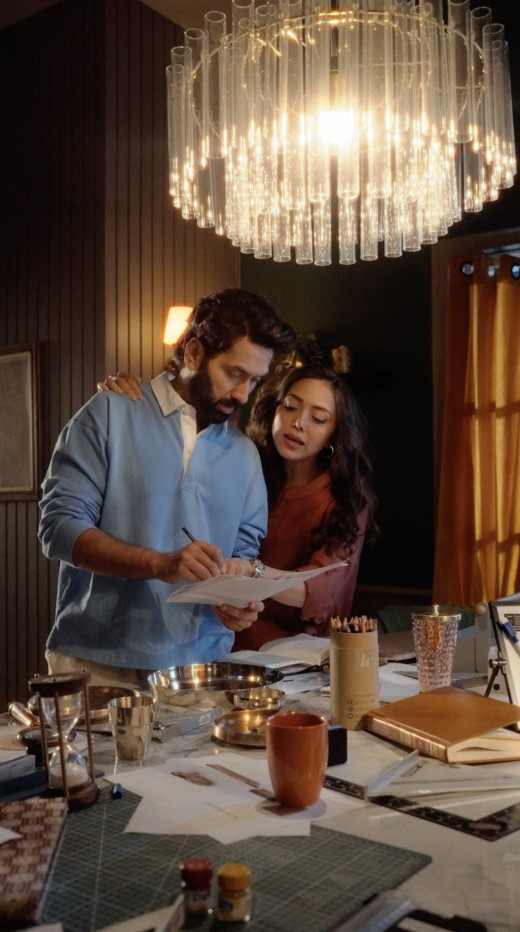
9. Nakuul, what part of fatherhood are you still figuring out?
Nakuul: Almost all of it. Fatherhood has been the most humbling role I’ve ever stepped into because every stage asks something new of you. Right now, I’m still figuring out how to be fully present while also balancing work, ambition and the many responsibilities that come with adulthood.
I’m also learning that parenting isn’t about having all the answers. Sometimes it’s about resisting the urge to fix everything and instead allowing your child to discover, struggle, fail and grow. The truth is, you’re growing as a parent at the same pace your child is growing up. The moment you think you’ve understood one phase, they’re on to the next, and you’re learning all over again.
10. Who is stricter when it comes to routines, and who is more likely to bend the rules at home?
Nakuul: Jankee would say I’m stricter, and I’d probably say she is. The truth is that we’re strict about different things. Jankee is usually the one who values consistency and structure because children thrive when they know what to expect. On the other hand, she feels I have a good instinct for understanding how a child is feeling in that moment and knowing when flexibility matters more than a schedule.
What works well is that neither of us is stuck in one role. Some days one of us is enforcing bedtime, and on other days we’re both saying yes to an extra story, a spontaneous dance party or dessert before dinner. Parenting has taught us that routines are important, but so are memories. The balance lies somewhere in between.
11. What does wellness mean to you both individually?
Nakuul: For me, wellness is about balance and being present. It's not just about fitness or nutrition. It's about creating habits that allow me to show up fully for my family, my work and myself.
Jankee: For me, wellness is feeling aligned physically, emotionally, and mentally. It comes from slowing down, spending quality time with family, finding joy in everyday moments, and making conscious choices that support long-term well-being rather than quick fixes. Together, we've realised that wellness isn't perfection. It's simply creating a life that feels healthy, intentional, and fulfilling for our family.
12. What’s next for you both?
Nakuul: I’m looking forward to a couple of interesting stories that will hopefully go into production in the second half of the year. At this stage of my career, nothing brings me more joy than being part of varied stories across different platforms and getting the opportunity to explore different kinds of characters and narratives.
Jankee is looking at reconnecting with music. It’s been a while since she’s performed full-time, and that’s something she’s genuinely excited about returning to.
Together, we’re committed to building the Indian Parent Pod, a very intentional parenting community that has grown out of our own experiences as parents. Through conversations, events and shared stories, we’ve seen how powerful it can be when parents feel heard and understood. The next step for us is to take those conversations further and connect with parents across the world.