
Soumya Maheshwari
11-Jun-2026
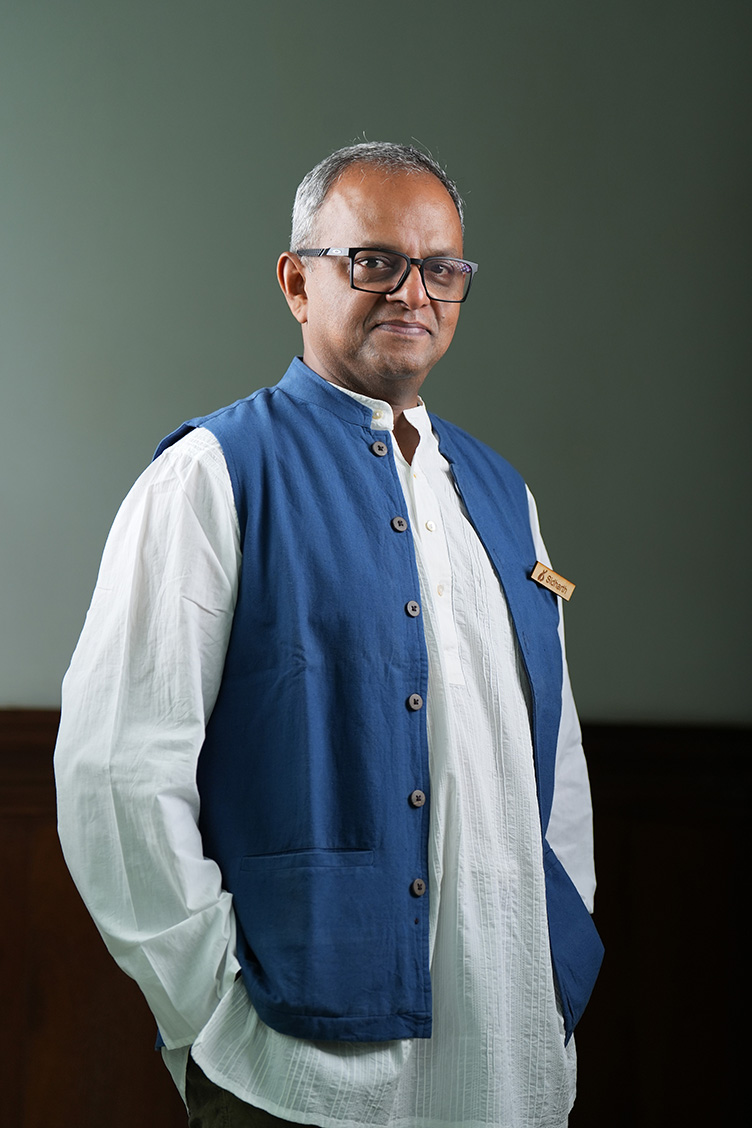
CEO of CGH Earth Wellness, Sidarth Dominic, speaks to GlobalSpa about longevity, preventive health, and why authentic wellness can never be rushed.
For nearly three decades, Sidarth Dominic has been at the forefront of shaping India's wellness hospitality landscape. As CEO of CGH Earth Wellness, he has always placed authenticity, sustainability, and healing above fleeting trends. Long before wellness became a global buzzword, CGH Earth was introducing international travellers to the transformative potential of Ayurveda through immersive, medically led experiences rooted in India's traditional healing systems. Under his leadership, the wellness arm has grown into a portfolio of acclaimed properties, including Kalari Kovilakom, Kalari Rasayana, Prakriti Shakti, and SwaSwara, each dedicated to personalised healing through Ayurveda, naturopathy, yoga, and mindfulness.
As conversations around longevity, preventive healthcare, and mindful living gain momentum worldwide, his belief that wellness is a lifelong practice rather than a luxury indulgence feels increasingly relevant. In conversation with GlobalSpa, Sidarth reflects on the evolution of wellness tourism, the growing demand for preventive health, Ayurveda, and the future of luxury wellness.
1. Wellness today ranges from serious medical healing to highly commercial lifestyle trends. How does CGH Earth Wellness differentiate itself in an increasingly crowded market?
Ayurveda has been one of India’s best-kept secrets, and we recognised an opportunity to bring it to a wider global market. Traditionally, those seeking Ayurveda had to visit conventional treatment centres that often lacked world-class hospitality standards. Our vision was to bridge that gap by combining high-quality hospitality with high-quality medical care. And that led to the launch of Kalari Kovalam in Kerala. Initially conceived as a rejuvenation and detox retreat, it evolved towards a more clinical and therapeutic wellness model. Over time, we strengthened our medical focus and eventually earned NABH accreditation.
For the past 10 to 15 years, we have remained committed to this path, prioritising depth, seriousness, and clinical excellence in holistic wellness. We consciously chose to focus on the clinical part of holistic wellness.
2. You’ve always focused on authenticity and discipline in wellness. At a time when people are looking for quick wellness fixes, has it become more difficult to maintain that standard?
While the masses are looking for a feel-good or wellness holiday, there is a discerning population seeking holistic approaches to wellness and longevity. We see that number growing, and we've chosen to be in that space. It is challenging. It's always tempting to move into fancy places that emphasise more on style, design, etc. But we have a chosen path, which is difficult, but that's also where the future is.
3. Longevity is now one of the fastest-growing global wellness conversations. How do you see traditional systems like Ayurveda and naturopathy contributing to the longevity movement?
The foundation of holistic medicine is the belief that longevity is not achieved through quick fixes—it is a way of life. True longevity comes from addressing root causes, changing unhealthy patterns, and embracing a disciplined, sustainable lifestyle. Before Covid, our Indian market accounted for only about 8–9%. Today, that figure has grown to nearly 46%, which shows that people have realised that you can have all the wealth, but if you don't have the health, the wealth has no value.
I believe we need to move away from a curative approach and focus more on prevention. More importantly, people need to understand that there are no shortcuts — health cannot be achieved overnight by taking pills or supplements. It requires consistency and commitment. Just as you take your car in for regular servicing, the human body also needs periodic care and maintenance. And an Ayurvedic Center would be the best place for it!
4. CGH Earth Wellness limits guest numbers to ensure personalisation. In a hospitality industry driven by occupancy and scale, how do you balance exclusivity with business growth?
We have a certain number formula, which we have kept for ourselves. We don't want to go beyond 20-25 rooms/patients at a time because the luxury we offer is the quality of time and the density of medical professionals per patient. There is always the temptation of going to a large format, but we don't think we'll be able to give this kind of luxury.
5. Many global luxury hotel chains are now entering the wellness space aggressively. Do you think wellness hospitality risks becoming aesthetic rather than transformational?
I think that risk is very real. It becomes about aesthetics and style rather than content, and we need to keep reminding ourselves of the space we are in and stay focused on our cause. So I think for us that is very clear.
6. Do you think modern travellers today are more ready for this kind of immersive healing experience than they were a decade ago?
The modern traveller is under pressure because of the fast-paced and unhealthy lifestyle. So people are seeking time for themselves, and most of the travellers who come to us are solo travellers. They come by themselves and spend time, so it's all focused on the self, and unfortunately, the modern lifestyle is pushing people into that.
7. Biohacking, preventive diagnostics, and functional medicine are increasingly influencing luxury wellness globally. Do you see CGH Earth Wellness integrating modern longevity science alongside traditional healing systems?
Our primary focus remains on the science of Ayurveda. We have consciously chosen to stay true to traditional methodologies when it comes to treatment and healing practices. However, we are also exploring the use of advanced diagnostic tools that can help identify pre-existing conditions and objectively measure a guest's health transformation over time. But when it comes to treatment, we remain committed to classical approaches, whether through Ayurveda or naturopathy.
8. As someone who has helped shape both leisure and wellness hospitality over decades, what shifts in human behaviour concern you today? And what role can wellness spaces such as spas and wellness resorts play?
The most significant shift I see is a growing consciousness that, as a society, we are heading down a path that is not particularly healthy. People are beginning to recognise that the pace at which modern life is moving is unsustainable.
At the same time, there is a growing desire to reclaim time, restore balance, and regain health. People understand that if they do not make space for their wellbeing, they may face serious consequences in the future. We believe wellness spaces can provide that solution. There is a tremendous opportunity, particularly in India, where a rapidly growing middle and upper class has greater disposable income but is also facing increasing lifestyle-related health challenges. Unfortunately, many of our health indicators as a nation remain concerning. While that reality is troubling, it also underscores the importance of wellness interventions.
9. How do you ensure that your doctors continue to develop and refine their expertise?
The doctors we have are highly skilled and trained. They understand where you are from, what kind of lifestyle you lead, and what some of your generational patterns are. After the assessment, they navigate you into a path because each individual is unique.
Additionally, today's wellness traveller is highly informed. They may have consulted specialists, explored Chinese medicine, experienced therapies in South America, or investigated other healing traditions before arriving here. Interacting with such a diverse and knowledgeable clientele keeps our doctors intellectually engaged and continuously learning. If there is one lesson we emphasise, it is the importance of remaining curious and receptive to new perspectives. Interestingly, this exposure has only strengthened their conviction about the continuing relevance and power of Ayurveda and other traditional healing sciences.
10. CGH Earth Wellness has traditionally been rooted in South India. Do you see opportunities to expand wellness offerings in other parts of the country?
We are opening our first wellness retreat in North India this September. The property, called Prakriti Shakti Tanmatra, is located in Almora, Uttarakhand, overlooking the Himalayan mountains. It follows the naturopathy-led philosophy of our existing Prakriti Shakti property in the South and will feature around 20 rooms.